Forearm Exercises
Direct wrist and forearm work for the flexors and extensors that control your grip and wrist position.
1 exercise
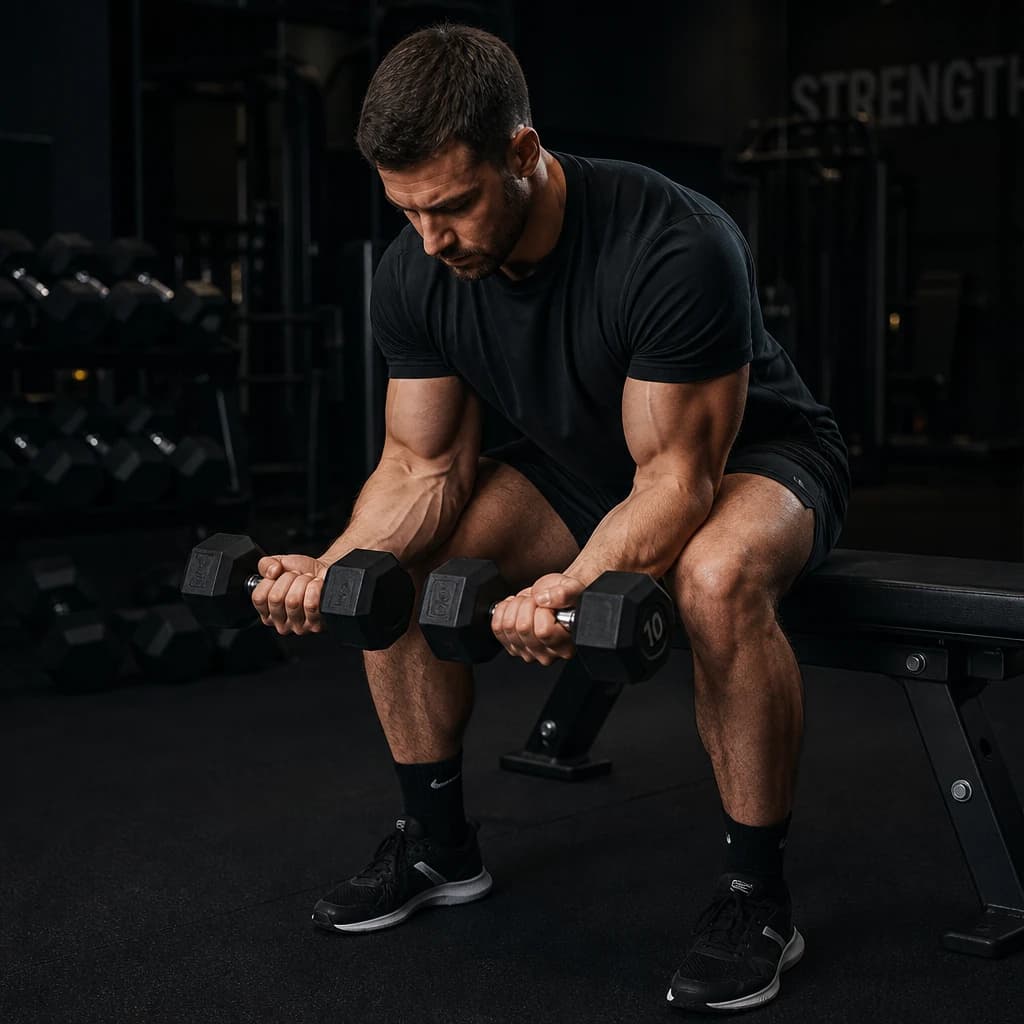
How to train your forearms
The forearm muscles bend and straighten the wrist and close the hand. They are already working every time you hold a barbell, hang from a bar or row something heavy, which is why most lifters never train them directly and still develop them. Direct work earns its place if your grip is the first thing to fail on deadlifts and rows, if you're chasing forearm size, or if a wrist or elbow has been complaining and you want to build tolerance.
Wrist curls train the flexors on the palm side; turning the hands over and lifting the back of the hand trains the extensors, which are usually the weaker and more neglected side. Keep the reps high — 15–20 with a slow, controlled lowering — since these are small muscles that respond better to time under tension than to heavy loads. Two to four sets a couple of times a week, after your main lifts, is enough. Loaded carries and dead hangs cover grip endurance with no extra equipment.
Grip strength itself is trainable separately from forearm size: hold the last rep of a heavy row for a few extra seconds, add a loaded carry at the end of a leg session, or hang from the pull-up bar for time. All three build the same tissue that wrist work does, without adding another isolation exercise to the program.